
Calories In. Calories Out. Right?
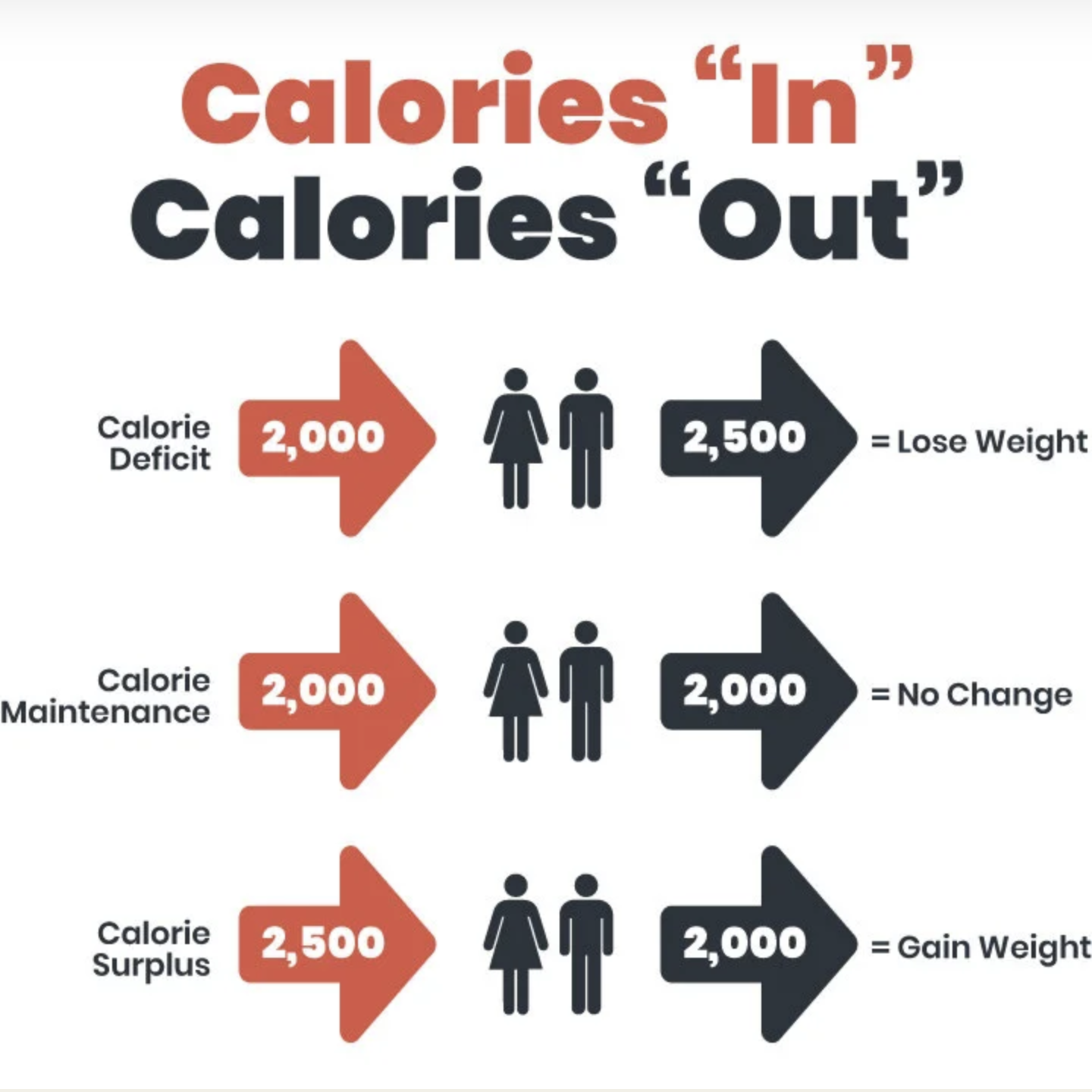
If you want to lose weight, eat fewer calories than you burn.
If you want to gain weight, eat more calories than you burn.
Simple, right?
Well, mostly.
"Calories in, calories out" is one of the most fundamental concepts in nutrition. Your body cannot create stored energy out of nothing. But that simple phrase is often misunderstood from both directions.
Some people dismiss calorie balance entirely because hormones, medications, genetics, and medical conditions can affect weight. Others take the opposite extreme and assume that every pound gained or lost on the scale must represent a change in body fat.
Neither interpretation tells the whole story.
Understanding the difference between body weight, body fat, energy intake, and energy expenditure can completely change the way you approach your health.
More importantly, understanding these things gives you something valuable: Control.
Your circumstances might make weight management easier or harder. Your maintenance calories might be higher or lower than someone else's. A medication might influence your appetite or activity level. Genetics can influence your starting point.
Those things are real.
But harder does not mean impossible.
First: What Does "Calories In, Calories Out" Actually Mean?
Your body requires energy every day.
Calories in are relatively straightforward. They are the energy you consume through food and drinks.
Calories out are more complicated.
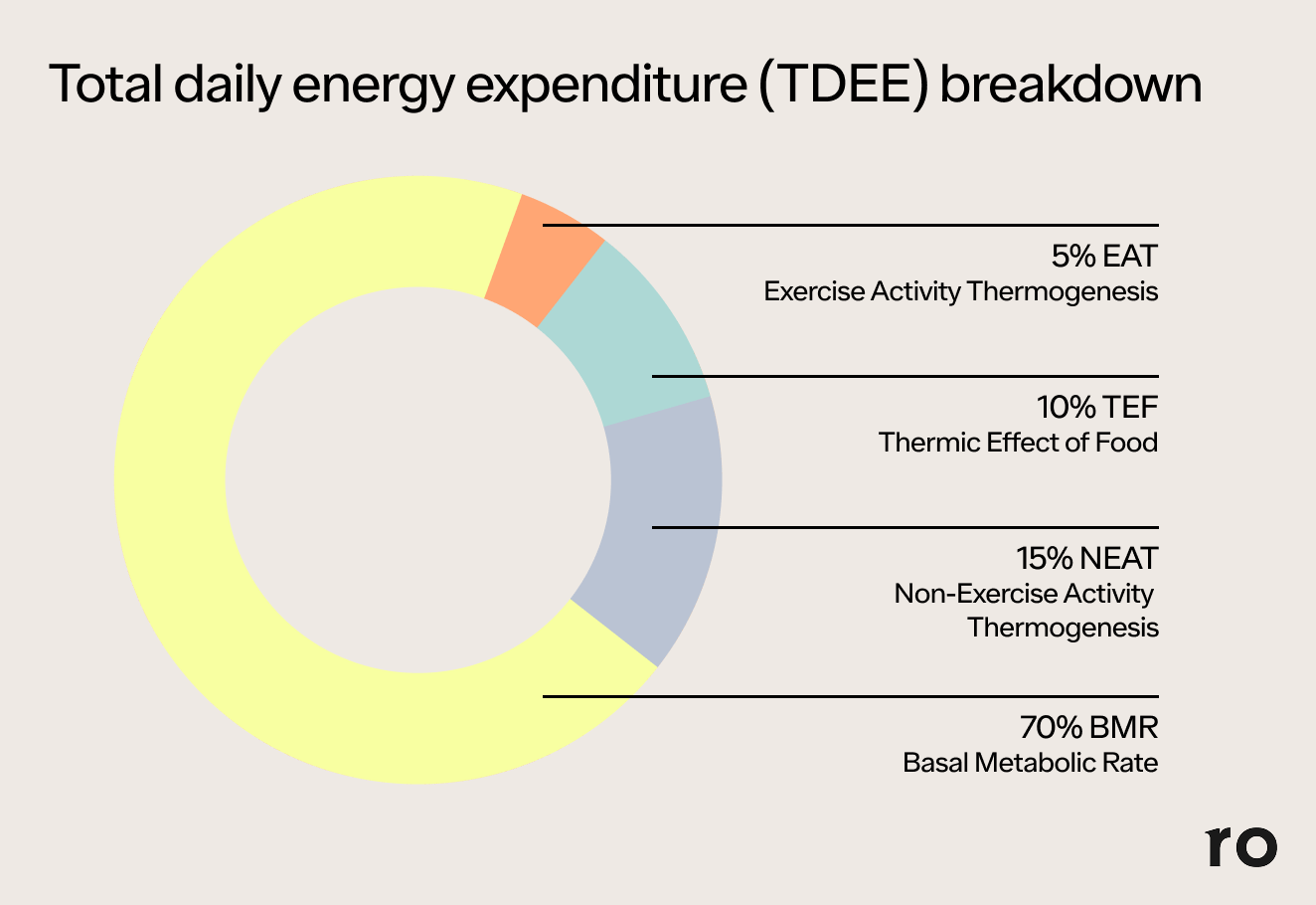
Your Total Daily Energy Expenditure, or TDEE, is the total amount of energy your body uses throughout the day.
Your Basal Metabolic Rate, or BMR, is the energy required simply to keep you alive at rest. Your body needs energy to breathe, circulate blood, maintain body temperature, operate your organs, and perform countless other processes.
Then you have the energy you expend through intentional exercise.
You also burn calories through non-exercise activity thermogenesis, or NEAT. This includes walking around the house, standing, doing chores, fidgeting, taking the stairs, and generally moving throughout the day.
Finally, digesting and processing food itself requires energy, something known as the thermic effect of food.
Put all of that together and you get your approximate TDEE.
These two truths are not debatable:
1) If you consistently consume less energy than you expend, your body has to make up that difference from stored energy. Over time, body mass will decrease.
2) If you consistently consume more energy than you expend, that additional energy has to go somewhere. Over time, body mass tends to increase.
Medications or medical conditions can influence certain factors (more on this below), but how much you eat and exercise is your choice. Physics does not care about your excuses.
Your Calorie Needs Can Change
Your maintenance calories aren't fixed.
As you lose weight, your body generally requires less energy to maintain itself. Your BMR and often your total daily energy expenditure decrease. Eventually, the calorie intake that created your original deficit may become your new maintenance.
If weight loss stalls, you may need to reduce calories further, increase activity, or both to recreate a deficit.
The opposite can happen as you build muscle. Muscle is metabolically active tissue, so adding it can modestly increase your BMR. A larger, more muscular, active body also generally requires more total energy.
If you love to eat, give yourself a little more room to do it. Get in the gym and build some muscle. Carrying more muscle increases your daily energy needs, allowing you to eat a little more while maintaining the same body weight. This doesn't mean gaining a few pounds of muscle suddenly lets you eat 1,000 extra calories per day. The effect is gradual.
But the principle matters:
Lose weight, and your calorie needs generally decrease. Build muscle and become more active, and your calorie budget can increase. Your TDEE is a moving target. After substantial weight loss/gain, you will need to adjust further.
The scale is where things get more complicated.
The Scale Doesn't Measure Body Fat
When you step on a scale, it doesn't tell you how much fat you gained yesterday.
It tells you how much everything in your body weighs at that particular moment.
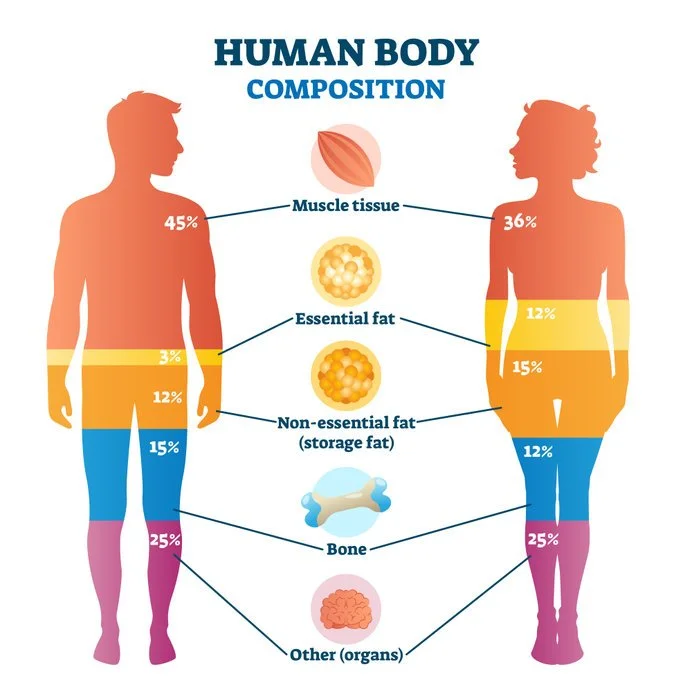
That includes muscle, fat, bone, organs, water, glycogen, food moving through your digestive system, and waste.
This means you can gain weight without gaining fat.
Suppose you're maintaining your weight at 2,500 calories per day. Your calorie intake doesn't change, but something causes your body to retain several additional pounds of water.
The scale goes up.
Did you violate the laws of thermodynamics?
Of course not.
Water contains no calories. Your body simply retained more of it.
That's not fat gain.
It's also why judging your progress from a couple of weigh-ins can be incredibly misleading.
Your body weight can fluctuate by several pounds without any meaningful change in body fat.
You might weigh 180 pounds one morning, eat a large restaurant meal containing a lot of carbohydrates and sodium, and see 183 or 184 on the scale shortly afterward.
You did not suddenly gain three or four pounds of body fat.
Some combination of additional water, glycogen, food, and waste is contributing to that number.
The important word here is fluctuation.
That is very different from watching your average body weight steadily climb for weeks or months.
If your weight jumps five pounds over a weekend, water and food weight could easily explain much of that change.
If you've gained 10, 20, or 30 pounds and maintained that higher body weight over a long period, that is no longer just water weight.
This is another reason daily weigh-ins are most useful when viewed as an average or trend rather than as individual verdicts.
Monday's number doesn't matter very much.
The direction of your average over the next eight weeks tells you considerably more.
"My condition/Medication Made Me Gain Weight"
This is where calories in, calories out gets oversimplified.
Some medications and conditions really are associated with weight gain. The key word here is associated.
Hypothyroidism doesn’t magically create body fat.
A medication can increase appetite.
A medication can cause fatigue or sedation, which can make you less inclined to exercise or move throughout the day.
A medication can alter aspects of metabolism or energy expenditure.
Some medications can also cause fluid retention, increasing scale weight without necessarily increasing body fat.
Those effects are real, and some people will face a more difficult weight-management situation because of them.
But there is a difference between explaining why something is difficult and deciding that you have no control over it.
If a medication increases your appetite, you may feel considerably hungrier. It still isn't putting food in your mouth.
If a medication makes you tired, getting your steps or completing your workout may become considerably harder. It hasn't taken away your ability to move.
Consider someone who eats 2,500 calories and expends approximately 2,500 calories each day.
Their weight is stable.
They begin taking a medication that causes fatigue. They move less throughout the day and their expenditure falls to 2,300 calories.
They continue eating 2,500.
Now they're in a surplus.
The medication contributed to that situation even though their food intake didn't increase.
But now that they understand what happened, they have options.
They can potentially increase activity.
They can potentially reduce calorie intake.
They can monitor their weight trend and adjust accordingly.
The solution might be more difficult than it was before.
More difficult is not the same thing as impossible.
It sounds harsh, but having an excuse doesn't change the outcome. Whether getting there was easy or incredibly difficult, excess body fat doesn't become healthier because you have an explanation for it. Take ownership and make the change.
"But I Barely Eat Anything"
This is another statement that deserves closer examination.
Human memory is terrible at estimating average calorie intake.
Someone might genuinely remember Tuesday when they had coffee for breakfast, skipped lunch, and ate a salad for dinner.
They think:
"See? I barely eat."
But what about Wednesday?
Maybe they had a light breakfast and lunch.
Then they went out to dinner and consumed 2,500 calories between an appetizer, entrée, sides, drinks, sauces, and dessert.
Neither Tuesday nor Wednesday alone tells you what their diet actually looks like.
Consistency and averages matter.
The Calories You Forget Still Count
This is where tracking can be eye-opening.
People tend to remember the obvious food.
Chicken. Rice. Sandwich.
They don't always remember everything surrounding it.
Cooking oil. Sauces. Drinks.
Those calories count too.
Sauces are a perfect example.
You might order grilled chicken and think you've made a relatively low-calorie choice.
Then you add ranch.
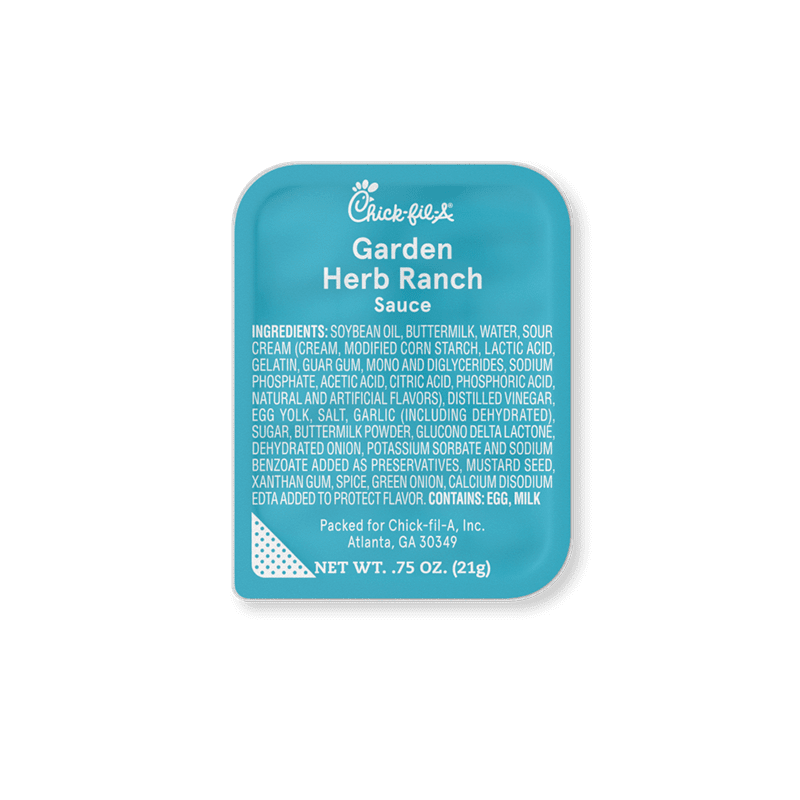
A single container of Chick-fil-A Garden Herb Ranch Sauce is roughly 140 calories.
The ranch isn't "bad." That's not the point.
The point is understanding that something physically small can contain a surprising amount of energy.
Oil works the same way. A tablespoon of oil contains roughly 120 calories.
And this is where I want to make something very clear:
The solution is not necessarily to spend the rest of your life obsessively measuring every drop of olive oil.
For most people, that isn't necessary.
You don't need to bring a food scale to a restaurant.
You don't need to panic because you don't know whether your chicken was cooked with eight grams or ten grams of oil.
You don't need perfect data to make dramatically better decisions.
What you need is calorie literacy.
Track Long Enough to Learn
Most people have absolutely no idea how many calories they consume in a typical day.
And why would they?
Unless you've spent time tracking food or studying nutrition labels, there's no reason you would intuitively know.
What does 200 calories of peanut butter look like?
How much is an actual serving of cereal?
How many calories are in your normal restaurant order?
Which foods give you a huge amount of volume for relatively few calories?
Which foods pack hundreds of calories into a few bites?
Most people have no idea.
That's why I think almost everyone could benefit from tracking their food for at least a few weeks at some point in their life.
Not forever, just long enough to learn.
Scan the barcode.
Read the nutrition label.
Look at the serving size. Measure it out.
See what an actual serving of cereal looks like.
After a few weeks, something starts happening.
You begin developing an intuition for food.
You see a bagel and know it's probably somewhere around a few hundred calories.
You recognize that oil is extremely calorie-dense.
You know that a giant restaurant entrée might easily contain a day's worth of calories for a smaller person.
You understand that chicken breast and peanut butter are completely different foods from a calorie-density standpoint.
You start recognizing realistic portion sizes.
At that point, someone who isn't pursuing a highly specific physique goal may decide they don't need to track everything anymore.
That's completely reasonable.
The goal was never to obsess over every calorie or chase perfection.
The goal was to stop being uninformed.
If your weight starts moving in a direction you don't want six months later, you now have the knowledge to recognize likely causes and make adjustments.
For someone pursuing bodybuilding, aggressive fat loss, precise muscle gain, or another specific physique goal, longer-term tracking can obviously be useful.
But the average person doesn't need bodybuilding-level precision.
They need awareness.
One Healthy Meal Doesn't Create a Healthy Week
This is why consistency matters more than individual moments of discipline.
Eating a salad for lunch doesn't automatically mean you're in a calorie deficit.
Eating pizza one night doesn't automatically mean you're in a calorie surplus.
What matters is how much you eat and what you do repeatedly over time.
People often remember their most restrictive meals because those meals require effort.
They forget the handfuls of snacks.
They don't think about the dressing.
They don't count drinks.
Then they genuinely feel confused when the scale doesn't move.
Instead of immediately assuming your metabolism is broken, collect some data.
Track everything for a few weeks.
Not just the meals you're proud of. Everything.
Then look at the average.
That will be more valuable to you than any diet or nutrition “hack”.
There’s no “one size fits all” in nutrition. You could go on the same diet as a friend and your results could be vastly different. Starting weight, body composition, and metabolism all play a role.
Figure out what works for you, don’t just copy what worked for someone else.
Losing Weight Isn't Necessarily the Goal
Here's another major problem with our obsession with scale weight:
Losing weight and losing fat are not the same objective.
Imagine two people who both lose 15 pounds.
One loses 13 pounds of fat and 2 pounds of lean mass.
The other loses 7 pounds of fat and 8 pounds of lean mass.
The scale says they accomplished exactly the same thing.
Their body-composition outcomes are completely different.
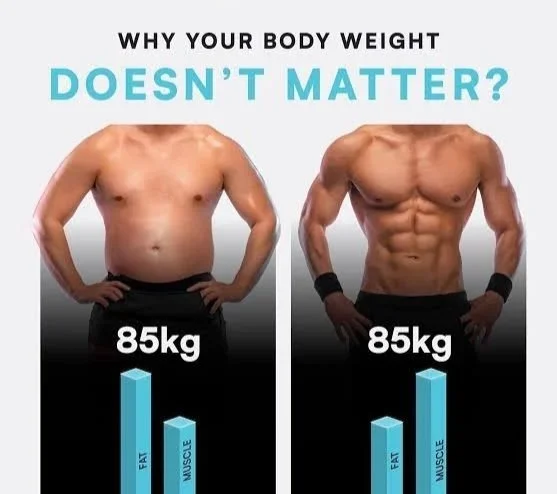
If your goal is improving your physique, you generally want to preserve as much muscle as reasonably possible while losing fat.
That's why resistance training, adequate protein (0.7-1g per lb of body weight), an appropriate calorie deficit, and monitoring more than scale weight are so important during a cut.
Don't just blindly celebrate every pound that disappears.
Ask yourself:
What am I actually losing?
Look at trends in your weight, but also consider measurements, progress photos, gym performance, and estimates of body composition (body fat percentage and lean muscle mass).
The Same Problem Happens When Bulking
Now reverse the situation.
You're trying to gain weight. You gain 20 pounds.
But what did you gain?
If a large portion was body fat, simply celebrating because the scale increased misses the point.
When trying to build muscle, the goal isn't usually "make the number on the scale increase as quickly as possible."
It's to provide enough energy and training stimulus to build muscle while limiting unnecessary fat accumulation.
Track your weight.
Track your calories.
Track your lifts.
Pay attention to your physique.
Adjust when the data tells you something isn't working.
Again, body composition matters.
I Learned This Through Recomping
I experienced the opposite problem when I first started training.
As a beginner, I trained for months and became discouraged because the number on the scale wasn't changing much.
I thought that meant I wasn't making progress.
What I didn't understand was that two things could be happening simultaneously:
I could be losing fat while gaining muscle.
If I lost five pounds of fat while gaining five pounds of lean mass, my scale weight wouldn't move.
Zero pounds of "progress," according to the scale.
Yet, I was stronger and looked more lean.
It wasn't until I started getting body-composition scans that I began to understand what was happening.
That's one reason I wish more people thought about body composition instead of simply body weight.
A Pound Is a Pound, But It Doesn't Look the Same
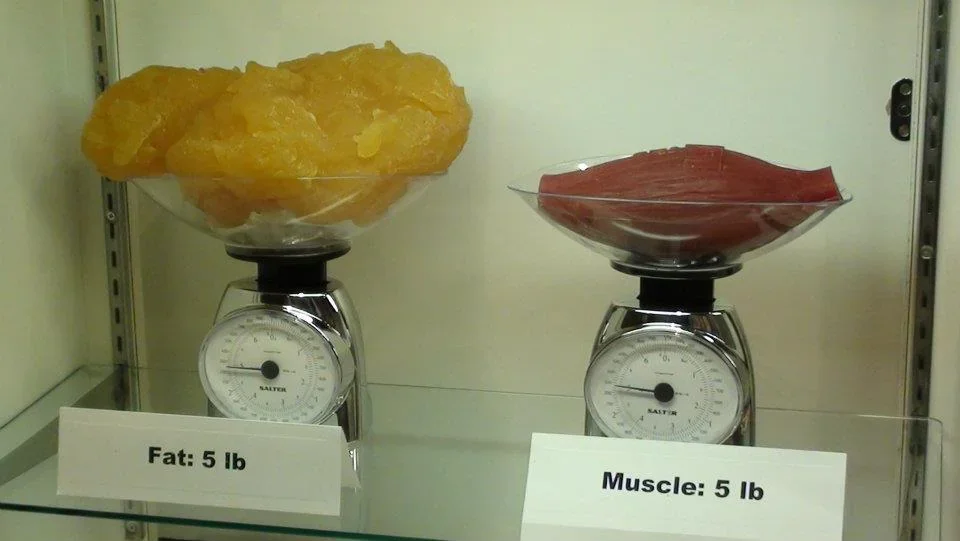
Five pounds of muscle and five pounds of fat both weigh exactly five pounds, but muscle is denser and takes up less space.
That's why someone with more muscle can weigh more than another person while still looking leaner and having a smaller waist. The scale only tells you total weight. It doesn't tell you what that weight is made of.
You Can Lose Weight Eating Skittles
Here's an intentionally ridiculous example.
Imagine that your maintenance expenditure is 2,500 calories per day.
Now imagine eating 2,000 calories of nothing but Skittles every day.
Would that be a healthy diet? Absolutely not.
But would you lose body mass over time? Yes.
Now flip it around.
Imagine eating an enormous quantity of foods generally considered healthy.
Salads. Nuts. Avocado. Olive oil. Whole grains. Lean meat. Fruit.
If you consistently consume more energy than you expend, you still gain body fat.
This is why "I eat healthy" and "I'm eating the appropriate number of calories for my goal" are two completely different statements.
Eating nutritious foods is important.
So is understanding how much you're eating.
Someone can maintain a low body weight while having a terrible diet. Being skinny does not automatically mean being healthy.
If you live on candy and stay below your maintenance calories, your relatively low body weight doesn't suddenly provide the protein, fiber, essential fatty acids, vitamins, and minerals you're missing.
Weight is only one indicator of health.
Diet quality matters.
Cardiorespiratory fitness matters.
Muscle mass and strength matter.
Sleep matters.
Lifestyle matters.
Body composition matters.
Stop Guessing
This is the part I think gets overlooked the most.
People will spend years saying:
"I have a slow metabolism."
"I just can't lose weight."
"I barely eat anything."
“It’s my genetics.”
"It’s my thyroid."
"It’s the medication I’m on."
Some of those statements may contain partial truth.
But if you aren't measuring anything, you don't actually know what is happening.
How many calories are you eating?
“Not that much.”
How many are you actually eating?
How active are you?
Collect data before deciding that your body simply doesn't respond.
You may discover that your maintenance calories are lower than you expected.
You may discover that you're eating significantly more than you thought.
You may discover that the scale hasn't changed because you're recomping.
You may discover that you're losing weight too aggressively and sacrificing muscle (*cough, cough* Ozempic).
You may discover that you're gaining weight much faster than necessary during a bulk.
Whatever you discover, information gives you something to act on.
Take Control of the Variables You Can Measure
In my own personal fitness journey, when I started tracking, I started making progress. It’s that simple.
Track your food.
Track your workouts.
Track your body weight.
Track your strength.
Do body scans/measure body composition.
Most importantly, look at trends, not individual measurements.
Maybe someone else can eat 2,800 calories and maintain their weight while you need 2,300.
Who cares?
Your job isn't to control their metabolism.
Your job is to understand yours.
Maybe your genetics aren't ideal.
You don't get to choose your genetics.
You do get to choose what you do with them.
Calories In. Calories Out. Right?
Right.
Hopefully, after reading this article, you understand what that phrase actually means.
Calories in, calories out doesn't mean that everyone's starting point is the same. It doesn't mean your metabolism doesn't matter.
That doesn’t mean you should use those things as an excuse.
Your genetics are your genetics.
Your medical history is your medical history.
Your medications are your medications.
Your circumstances are your circumstances.
Understand them. Account for them. Get professional help when you need it.
Then work with what you have.
No more excuses, it's time to take ownership of your life.