Does your workout program really matter?
Push. Pull. Legs.
Upper. Lower.
Bro split.
Open social media and you’ll find someone ready to explain why the program you’re running is wrong and why their program is the secret to finally building muscle.
Here’s the truth:
Your workout program probably doesn’t matter nearly as much as you think it does.
That doesn’t mean training is random. Exercise selection, rep ranges, volume, frequency, and programming all matter to some extent.
They’re just not where most beginners should be spending their energy.
A Quick Note About Weight Loss
Before going any further, most of this article is focused on building muscle, or hypertrophy.
If your primary goal is losing weight, your training may look a little different. Adding cardio, walking more, or simply becoming more active can increase the number of calories you burn each day.
But as I discussed in “Calories In. Calories Out. Right?”, weight loss is still primarily a nutrition problem.
Exercise burns fewer calories than most people think. You can spend an hour on a treadmill and undo much of that calorie expenditure with a single snack. Meanwhile, your body is burning calories 24 hours a day just keeping you alive, digesting food, moving around, and maintaining normal bodily functions.
That’s why trying to out-train a bad diet is usually a losing strategy.
Cardio is great. It improves cardiovascular fitness, increases your daily energy expenditure, and has plenty of health benefits outside of weight loss. Resistance training is also valuable while losing weight because it gives your body a reason to retain muscle while you’re in a calorie deficit.
But neither changes the basic equation.
If fat loss is your goal, nutrition should create most of the calorie deficit. Exercise should support it.
The rest of this article is primarily about the other side of the equation: how to train when you want to build and maintain muscle.
Analysis Paralysis
When I first started taking lifting seriously, I wanted to do everything perfectly.
I wanted the perfect program. The perfect exercise selection. The perfect number of sets. The perfect rep range. If I found something suggesting another exercise might be slightly better, I questioned whether I should change what I was doing.
It becomes analysis paralysis.
You spend so much time worrying about whether you’re doing the absolute best thing that you lose sight of what actually makes you grow.
I started making the most progress when I stopped obsessing over exercise selection and programming and started focusing on something much simpler:
Training hard.
Instead of constantly asking whether I was doing the perfect exercise, I started asking whether I was actually pushing myself on the exercises I was already doing.
That’s a much more important question.
Arnold vs. Mentzer: Two Completely Different Approaches
If there were one perfect way to build muscle, you would expect the best bodybuilders to train somewhat similarly.
They didn’t.
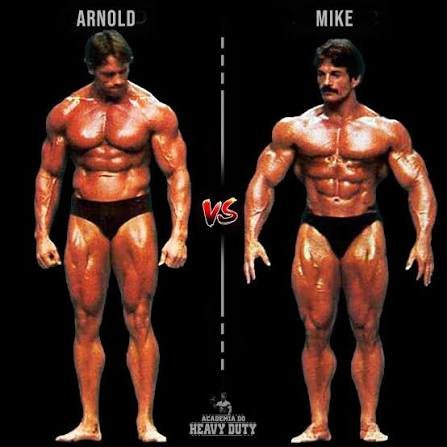
Arnold Schwarzenegger and Mike Mentzer are perfect examples.
Arnold became famous for an extremely high-volume approach to bodybuilding.
At his most extreme, Arnold would train six days per week and sometimes twice per day. His workouts could include 3 to 4 sets per exercise and 20+ sets per lifting session, accumulating a massive number of sets throughout the week.
Mike Mentzer eventually went almost completely in the opposite direction.
Mentzer’s Heavy Duty philosophy was built around the idea that if a set was truly taken to muscular failure, you didn’t need to train as often or at the same volume.
A workout might contain only three to five actual working sets, with roughly one all-out working set per exercise. He then recommended several days of recovery before training again.
That means we’re comparing:
Arnold: 3 to 4+ sets per exercise, potentially 20+ sets in a workout, six training days per week, one rest day.
Mentzer: 1 working set per exercise, roughly 3 to 5 working sets in an entire workout, followed by several days of recovery before training again.
But both built extraordinary physiques.
Obviously, genetics and performance-enhancing drugs played major roles for both men.
Regardless, instead of asking which approach was better, look at one of the few things Arnold and Mentzer actually had in common:
They trained with intensity.
Their approaches to training were completely different, but neither man was casually going through the motions.
That’s the part worth paying attention to.
There clearly isn’t one magical combination of exercises, sets, reps, and training days required to build muscle.
Many people won’t like that answer. I know I didn’t.
As a logical thinker, I want a simple formula I can follow that allows me to mimic another person’s results.
The reality is that everyone’s bodies and genetics are different, and there are thousands of different variables that come into play: diet, sleep, height, recovery, training history, and more.
Instead of copying someone else verbatim, use recommendations as a template to build a program that works specifically for you. The best way to figure that out is to start with something simple, experiment, track, and adjust based on what works.
Before worrying about optimization, learn to train with intensity and understand what being close to failure actually feels like.
Volume Isn’t Everything
This is also where I think a lot of people misunderstand high-volume training.
More volume can absolutely produce more growth, up to a point.
But more sets do not automatically mean more productive sets.
Imagine I tell you to perform 15 sets for chest.
You know you have 14 more sets coming after the first one. Are you really going to take that first set as close to failure as you would if you knew you only had two hard sets to perform?
Maybe.
But a lot of people don’t.
People are also notoriously bad at judging how close they actually are to failure, especially when they haven’t spent much time actually training there.
A person finishes a set of 10 and thinks:
“I probably had two more.”
Then you tell them to keep going.
They do 11…then 12…13…14…15.
That’s a massive difference.
This is one reason I personally prefer doing fewer sets and making those sets count. I’m not saying everyone needs to train like Mike Mentzer.
I still train 5 days per week myself and do at least two sets per exercise.
I’m saying that adding more and more volume doesn’t help much if the extra volume gives you an excuse to reduce the effort you put into each set.
Quality volume matters more than collecting sets.
But how do you actually measure how hard those sets are?
We should use RIR, or as you may have guessed, reps in reserve.
It’s simply an estimate of how many more good reps you could have completed before reaching muscular failure.
If you finish a set and could have performed three more reps:
3 RIR.
If you attempt another rep and physically cannot complete it with acceptable form:
0 RIR. You’ve reached failure.
This gives us a much better way to think about training intensity than simply saying a workout was “hard.”
And this isn’t just gym bro logic. Research examining proximity to failure suggests that muscle growth tends to increase as sets are terminated closer to failure. A 2024 meta-regression found greater hypertrophy as estimated RIR decreased.
At the same time, research comparing failure with non-failure training shows that actually hitting absolute failure is not required to build muscle.
In other words, you don’t necessarily need to fail the rep.
You just need to get reasonably close.
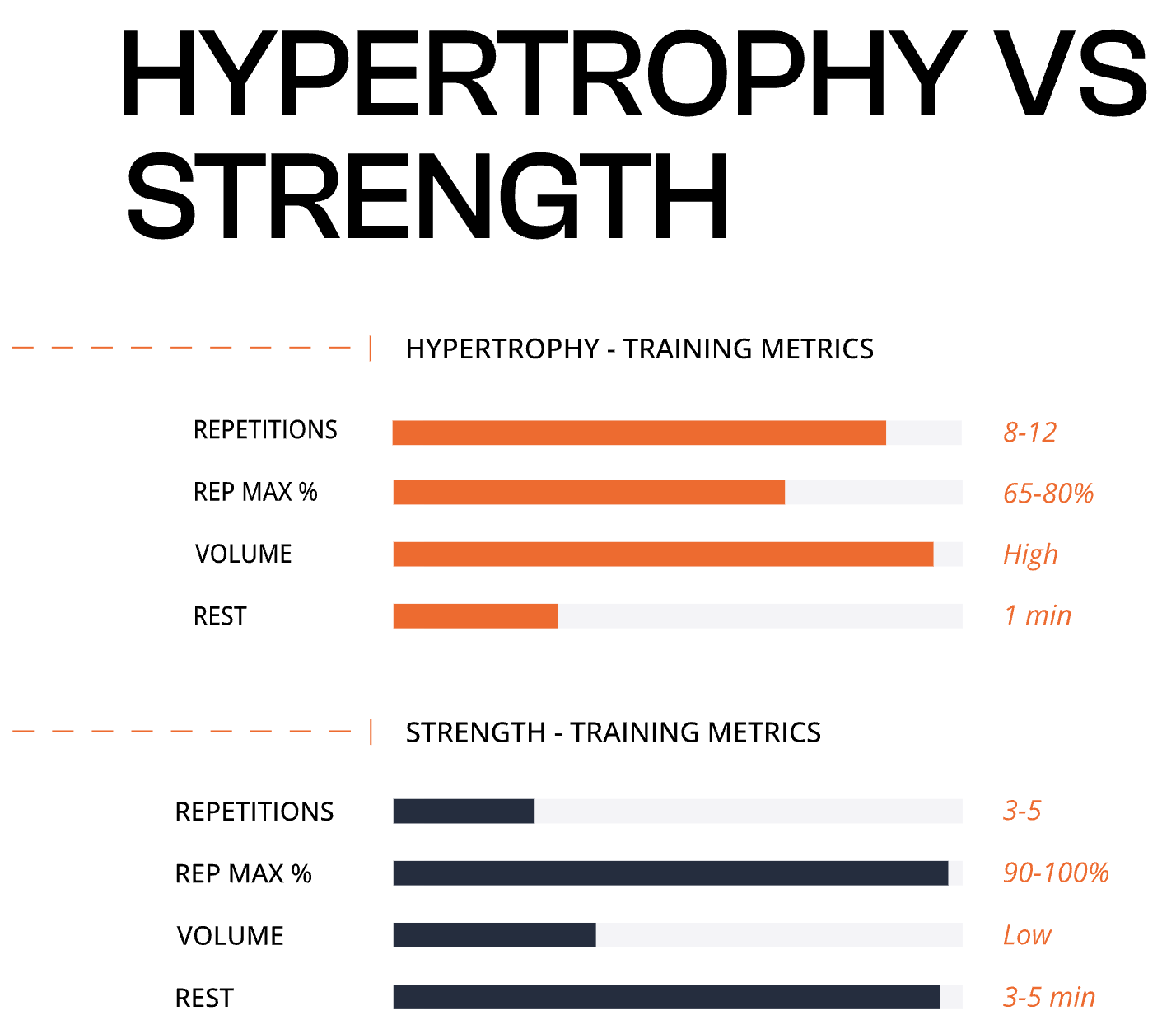
Hypertrophy vs. Strength
It’s also important to understand the difference between getting stronger and building muscle.
They’re related, but they aren’t exactly the same thing.
Strength is your ability to produce force. Getting stronger involves building muscle, but your nervous system, technique, and familiarity with a specific movement also play major roles.
If your goal is to bench press as much weight as possible for one rep, it makes sense to practice the bench press and spend meaningful time training with heavier loads.
Hypertrophy simply means increasing the size of your muscle.
For hypertrophy, you have much more flexibility.
Your muscles don’t care what logo is on the equipment. What matters is whether the exercise effectively loads the target muscle and allows you to challenge it over time.
That’s why you can build muscle across different exercises and rep ranges.
If your primary goal is looking muscular, you don’t need to obsess over whether 8 reps is magically better than 10 or whether a preacher curl is inherently superior to a cable curl.
Choose movements that effectively train the muscle, that you can perform comfortably, and that allow you to progressively challenge yourself.
Then train hard.
“I Don’t Want to Get Too Big”
This is one of the strangest fears surrounding resistance training, and I hear it most often from women.
“I don’t want to get too big. I just want to tone.”
First, “toning” isn’t a separate physiological process.
When people say they want to look “toned,” they usually mean they want to look lean and have visible muscle definition. That appearance primarily comes from having enough muscle to create shape and having little enough body fat for that muscle to be visible.
You don’t build special “toned” muscle by doing sets of 30 with tiny dumbbells.
The fear of accidentally getting “too big” from resistance training is also pretty ridiculous when you understand how difficult building substantial muscle actually is.
Saying “I don’t want to lift weights because I might get too big”is a little like saying, “I don’t want to drive too much because I might accidentally become a Formula 1 driver.”
Building a considerable amount of muscle, like becoming an elite driver, takes years of deliberate effort. It requires consistent resistance training, progressive overload, adequate nutrition, and a conscious effort to continue getting bigger and stronger.
And if at some point you decide you have exactly as much muscle as you want, you can simply stop intentionally trying to gain more.
For most people, adding some muscle actually creates more of the lean, athletic, defined appearance they’re looking for in the first place.
Your arms have some definition.
Your legs look athletic.
Your glutes have more shape.
You might discover that lifting heavy weights and challenging yourself gives you the exact look you were trying to achieve by “toning.”
Resistance Training Is About More Than Looking Good
Muscle isn’t just cosmetic.
There is a reason resistance training becomes increasingly important as you get older.
We naturally tend to lose muscle mass and strength as we age. Maintaining strength makes ordinary life easier. Getting out of a chair, carrying groceries, climbing stairs, picking something up off the floor, and remaining physically independent all require some level of strength.
Resistance training helps preserve muscle mass and strength. Regular physical activity also helps support physical function and reduce the risk of falls and functional limitations as we get older.
It also provides a stimulus for your bones. Along with other forms of physical activity and adequate nutrition, resistance training can help support bone health as you age.
Think about what you want your body to be capable of at 60, 70, or 80 years old. You want to climb stairs, get off the floor, carry your own groceries, travel, play with your grandchildren, and remain independent for as long as possible.
Strength gives you options.
The muscle you build when you’re younger isn’t just something to show off at the beach. Building and maintaining strength throughout your life is an investment in what your body will still be capable of decades from now.
There is no reason to be afraid of resistance training.
Recovery Matters
Training provides the stimulus.
Recovery allows you to adapt to it.
If you’re training hard but sleeping five hours per night, eating poorly, and carrying fatigue from one workout into the next, adding three more exercises probably isn’t the answer.
Eat enough calories for your goal.
Eat enough protein.
Sleep.
Rest.
Then come back and train hard again.
This is the other half of the volume equation.
Progressive Overload Doesn’t Have to Be Complicated
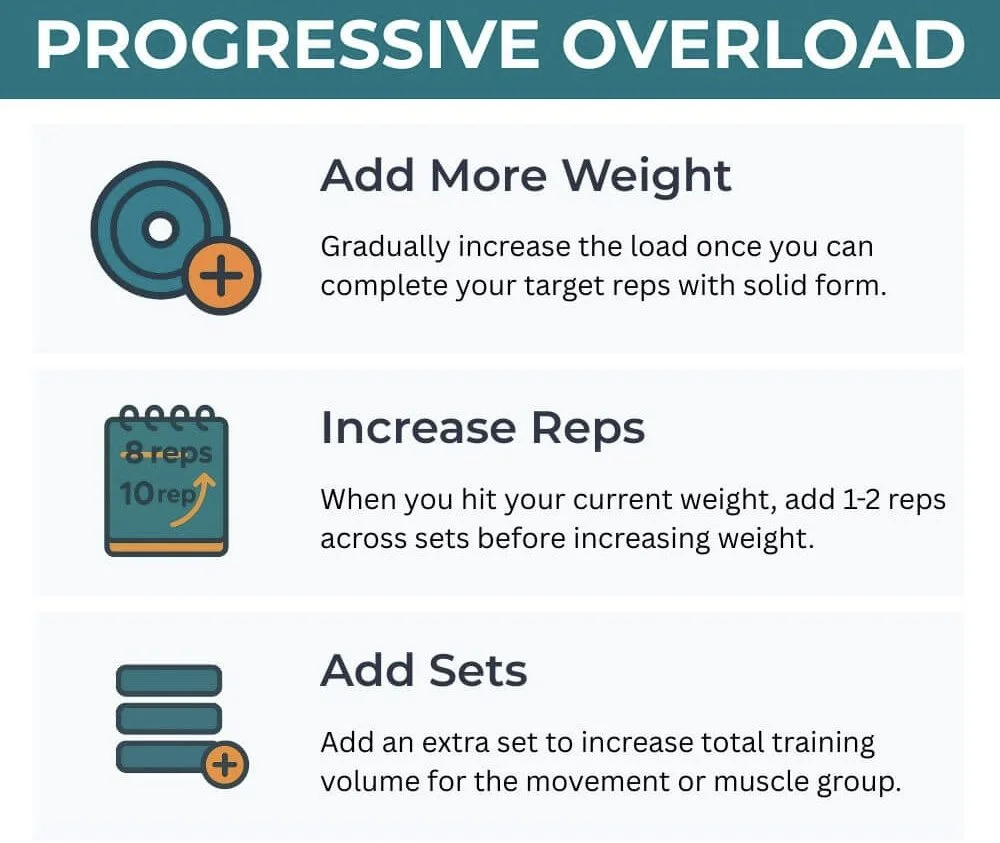
If you’re doing the same movement over time and gradually becoming capable of doing more, you’re progressing.
Maybe you add weight.
Maybe you get another rep.
Maybe you perform the same weight and reps with better control.
Progressive overload is also why you don’t need to constantly change exercises. Keeping movements in your program long enough to track them gives you an objective way to see whether you’re actually progressing.
Imagine someone incline presses 135 pounds for 8 reps today.
Months later, they’re pressing 185 for 8 reps with equally good form.
Do you really think their chest hasn’t adapted because somebody on TikTok says they picked the wrong incline press variation?
Probably not.
Consistency Beats Optimization
There are better and worse ways to train. Exercise selection matters. Volume matters. Frequency matters. As you become more experienced, those details are worth optimizing.
But don’t let optimization get in the way of actually training.
Train hard. Get close to failure. Do enough volume to grow. Recover. Progress over time.
Start with a reasonable program and learn as you go. You’ll figure out which exercises work best for you, how much volume you can recover from, and how your body responds.
So, does your program really matter?
Yes, but not as much as you think. There are no hacks and no shortcuts. Just train hard.